How to Grow on Social Media in 2026: 15 Practical Strategies for Beginners
Growing on social media in 2026 is less about finding a secret hack and more about consistently creating content that the right people actually want to see.
If you’re starting from zero—or you’ve been posting for months without seeing much growth—you don’t necessarily need more followers, hashtags, or viral trends. You need a simple strategy you can repeat, measure, and improve.
In this guide, I’ll walk you through 15 practical strategies to grow on social media in 2026, with a focus on Instagram and advice beginners can realistically put into practice.
Quick note: Instagram’s recommendation and ranking systems change over time and can vary by account, audience, location, and content type. The goal isn’t to “beat the algorithm.” It’s to create content people find useful enough to watch, save, share, comment on, or follow you for.
1. Choose a Clear Niche
One of the easiest mistakes beginners make is trying to talk about everything.
If someone visits your profile, they should quickly understand:
- Who your content is for
- What you talk about
- Why they should follow you
- What they can expect from your account
For example, instead of:
“I post about my life, food, fitness, travel, business, and motivation.”
Try:
“Simple home workouts and realistic fitness tips for busy beginners.”
The second profile gives people a much clearer reason to follow.
Your niche doesn’t have to be extremely narrow
You don’t need to choose something as specific as “15-minute workouts for left-handed beginners.”
A broader category can work if you have a clear audience and point of view.
For example:
- Fitness → workouts for busy beginners
- Food → affordable healthy meals
- Finance → simple money tips for young adults
- Marketing → social media tips for small businesses
- Beauty → beginner-friendly skincare routines
The goal is clarity, not restriction.
2. Know Exactly Who You’re Creating For
Before creating dozens of posts, think about the person you want to reach.
Ask yourself:
- What problems do they have?
- What questions do they regularly search for?
- What would make their life easier?
- What type of content would they save?
- What would make them share a post with a friend?
For example, if your audience is beginner business owners, content like:
“5 Instagram mistakes small businesses make”
may be more useful than:
“My morning routine as an entrepreneur.”
The best content starts with the audience’s needs rather than the creator’s desire to post something.
3. Create Content Around 3–5 Core Topics
Once you’ve chosen your niche, create a few content pillars.
Content pillars are simply the main subjects you repeatedly create content about.
For a social media tips account, your pillars could be:
| Content Pillar | Example Topics |
|---|---|
| Instagram Tips | Reels, captions, posting tips |
| Content Creation | Ideas, hooks, planning |
| Growth | Engagement, reach, consistency |
| Education | Tutorials and how-to posts |
| Mistakes | Common beginner errors |
This makes content planning much easier.
Instead of asking yourself every morning, “What should I post today?”, you can choose a topic from one of your pillars and build from there.
4. Prioritize Useful Content Over Random Content
A post doesn’t have to go viral to be valuable.
Some of your best content may simply solve a problem.
Think about creating posts that help someone:
- Learn something
- Make a decision
- Solve a problem
- Save time
- Avoid a mistake
- Find an idea
- Understand something confusing
For example:
Weak:
“Social media is important for businesses.”
More useful:
“7 Instagram content ideas for a small business that has no idea what to post.”
The second post gives the reader a reason to stop scrolling.
Instagram’s recommendation systems use many signals and predictions about how people may interact with content. Meta has also explained that actions such as sharing can be one signal used in its recommendation systems.
So instead of obsessing over an “algorithm trick,” concentrate on making content worth interacting with.
5. Use Reels for Reach, But Don’t Ignore Other Formats
If you’re focusing on Instagram, short-form video should be part of your strategy—but it shouldn’t be your entire strategy.
Experiment with:
- Reels
- Carousels
- Single-image posts
- Stories
- Lives, when appropriate
Each format can serve a different purpose.
A simple Instagram content mix
You could test something like:
- Reels: discovery and reaching new people
- Carousels: education and saves
- Stories: conversation and relationship building
- Single images: announcements, quotes, products, or strong visual ideas
Don’t assume one format is automatically best for every account.
Look at what your own audience responds to and adjust accordingly.
6. Make the First Few Seconds Count
When someone encounters your content, they need a reason to keep watching or reading.
For a Reel, this could be a strong opening line.
For a carousel, it could be a clear first slide.
Instead of starting with:
“Hi everyone, today I want to talk about…”
Try:
“Posting every day but still not growing?”
Or:
“Stop making these 5 Instagram mistakes.”
Or:
“If I had to grow a new Instagram account from zero, here’s what I’d do.”
The hook should accurately represent what follows.
Avoid exaggerated hooks that promise something your content doesn’t deliver.
7. Create Original Content With Your Own Perspective
You don’t have to invent a completely new topic.
You can take a familiar topic and make it more useful through your:
- Experience
- Examples
- Opinion
- Process
- Explanation
- Personal results
- Unique presentation
For example, instead of simply posting:
“5 Instagram tips”
you could create:
“5 Instagram changes I would make if I were starting my account from zero.”
That’s still a familiar topic, but it has a clearer perspective.
Instagram has published recommendation guidance intended to help creators understand what kinds of content may be eligible for recommendations, and Meta has also emphasized the role of recommendation systems in helping people discover content from accounts they don’t already follow.
8. Make Your Profile Easy to Understand
Getting someone to discover your post is only half the job.
You also want that person to understand your profile quickly.
Review these four areas:
Profile photo
Use an image that’s recognizable at a small size.
For businesses, a clear logo can work. For personal brands and creators, a clear face often makes the account easier to recognize.
Username
Keep it simple and easy to remember.
Name field
Use words that help explain what you do when appropriate.
Bio
Your bio should quickly communicate:
Who you help + what you provide + why someone should follow.
For example:
Simple social media tips for small businesses
Content ideas • Instagram • Reels
Helping beginners post with more confidence
Your profile doesn’t need to be complicated.
It needs to be clear.
9. Write Captions That Add Something
Your caption doesn’t need to be an essay.
A useful caption can:
- Explain the post
- Add context
- Tell a short story
- Give additional tips
- Ask a relevant question
- Encourage the reader to take a useful next step
For example:
“If you’re struggling to come up with Instagram content, don’t start by looking for 30 random ideas. Start with 3 questions your customers ask repeatedly. Turn each question into a post, Reel, or carousel.”
That’s more useful than simply writing:
“What do you think?
Use calls to action when they genuinely fit the content.
Don’t manufacture engagement with misleading or manipulative prompts. Instagram’s recommendation guidance has historically identified certain forms of clickbait and engagement bait among content it may avoid recommending.
10. Stop Treating Hashtags Like a Growth Shortcut
Hashtags can help provide context and make content easier to discover in relevant searches, but they shouldn’t be your entire growth strategy.
Instead of adding a huge collection of unrelated hashtags, focus on making your content itself clear.
Use relevant words in:
- Your caption
- On-screen text
- Your topic
- Your profile
- Your content description
For example, if your post is about Instagram content ideas for restaurants, make that topic obvious.
Think relevance first, quantity second.
11. Build a Realistic Posting Schedule
You don’t need to post 5 times every day to grow.
A schedule you can maintain is usually more useful than an ambitious schedule you abandon after two weeks.
For example, a beginner might test:
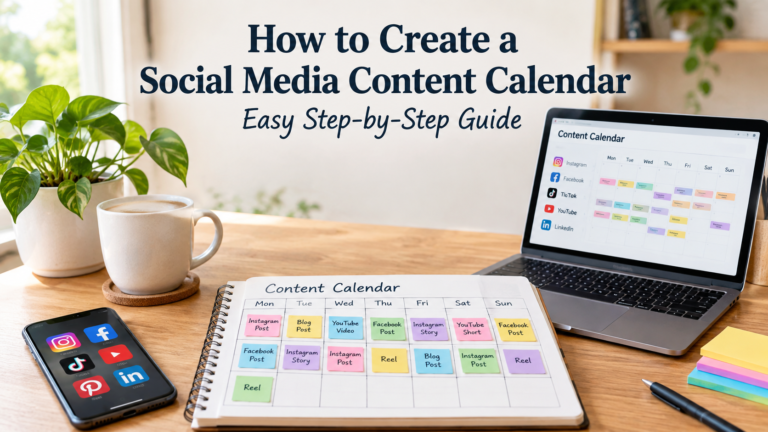
| Day | Content |
|---|---|
| Monday | Educational Reel |
| Tuesday | Stories |
| Wednesday | Carousel |
| Thursday | Stories/Q&A |
| Friday | Educational Reel |
| Saturday | Personal or behind-the-scenes content |
| Sunday | Planning and research |
This is only a starting point.
Your ideal schedule depends on your available time, audience, niche, content format, and ability to maintain quality.
Consistency means having a repeatable system—not posting constantly.
12. Use Your Analytics Instead of Guessing
This is one of the most important habits you can develop.
Don’t simply ask:
“Did this post get many likes?”
Look at the bigger picture.
Depending on the available Insights for your account and content type, pay attention to things such as:
- Reach
- Views
- Shares
- Saves
- Comments
- Profile visits
- Follows
- Watch behavior
- Audience information
Then compare your content.
For example:
If one Reel gets 10,000 views but almost nobody visits your profile, while another gets 4,000 views and generates 100 profile visits, the second piece may be more valuable for your actual growth goal.
Instagram introduced a Best Practices section inside the professional dashboard to provide creators with guidance around creation, engagement, reach, monetization, and guidelines, including personalized tips.
Use the information available inside your own account rather than relying completely on generic “best time” or “algorithm” advice.
13. Test One Variable at a Time
Don’t change everything simultaneously.
Suppose your Reels aren’t performing well.
Instead of changing:
- Topic
- Hook
- Length
- Editing
- Caption
- Posting time
- Hashtags
all at once, test one or two meaningful changes.
For example:
Week 1: Test stronger hooks.
Week 2: Test a different content topic.
Week 3: Test shorter explanations.
Week 4: Compare the results.
You don’t need a perfect scientific experiment.
You simply want enough consistency to learn what your audience responds to.
14. Engage With Your Community
Growth isn’t only about publishing.
Spend time responding to:
- Comments
- Relevant questions
- Story replies
- Direct messages
- Conversations related to your niche
You can also participate thoughtfully in relevant conversations.
But avoid turning engagement into spam.
Don’t leave generic comments such as:
“Nice post!”
on hundreds of unrelated accounts just hoping people will visit your profile.
Instead, contribute something useful.
If someone asks a question your expertise can genuinely help with, give them a useful answer.
15. Focus on Building an Audience, Not Just Followers
A follower count can look impressive while telling you very little about the health of an account.
Ask better questions:
- Are the right people following me?
- Do people return to my content?
- Are my posts being shared?
- Are people saving useful information?
- Are people replying to my Stories?
- Are profile visitors becoming followers?
- Are followers becoming customers or subscribers when that’s the goal?
The real objective isn’t:
“Get more followers.”
It’s:
“Build an audience that cares about what I consistently provide.”
That’s a much stronger foundation for long-term growth.
A Simple Instagram Growth Strategy for Beginners
If these 15 strategies feel like too much, start with this simple system.
Step 1: Choose one clear audience
Decide who you’re trying to help.
Step 2: Choose 3–5 content pillars
Don’t create random posts every day.
Step 3: Create useful content
Focus on questions, problems, mistakes, and goals your audience actually has.
Step 4: Use multiple formats
Test Reels, carousels, Stories, and other formats that make sense for your account.
Step 5: Create a realistic schedule
Choose a frequency you can maintain for months.
Step 6: Review your analytics
Look for patterns instead of judging every post individually.
Step 7: Repeat what works
If a particular topic consistently attracts the right audience, create more content around that topic.
Step 8: Improve gradually
Your strategy doesn’t have to be perfect on day one.
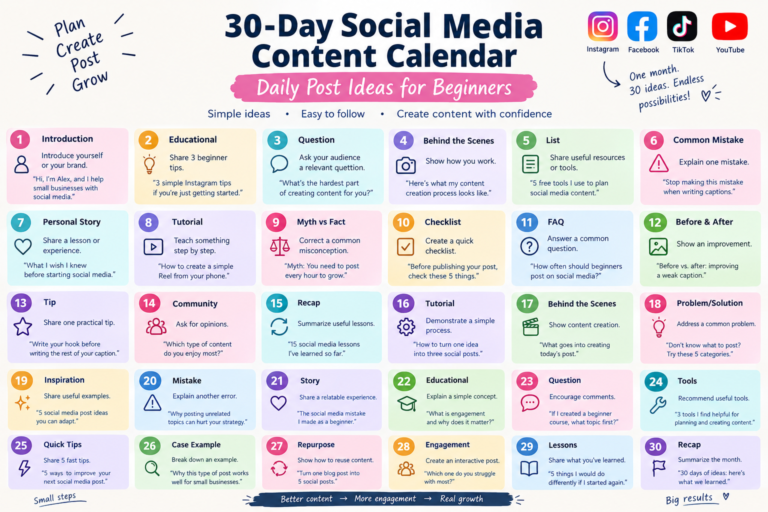
30-Day Social Media Growth Plan for Beginners
Here’s a simple starting plan you can actually follow.
| Week | Main Goal | What to Do |
|---|---|---|
| Week 1 | Build your foundation | Define niche, audience, bio, and content pillars |
| Week 2 | Create consistently | Publish useful Reels/carousels and Stories |
| Week 3 | Test and learn | Try different hooks, topics, and formats |
| Week 4 | Review results | Identify strong topics and improve your next content plan |
At the end of the month, don’t simply ask:
“How many followers did I gain?”
Also ask:
“What did I learn about my audience?”
That information can make your next 30 days much better.
Common Social Media Growth Mistakes to Avoid
Posting About Everything
If your audience can’t tell what your account is about, they have less reason to follow.
Copying Other Creators
Study successful content, but don’t simply duplicate someone else’s posts.
Take the underlying idea and add your own perspective.
Chasing Every Trend
A trend isn’t useful if it doesn’t make sense for your audience.
Use trends selectively.
Buying Followers
Artificial numbers don’t create a genuine community and can make it harder to understand your real audience.
Obsessing Over Follower Count
A smaller audience that actively engages with your content can be more valuable than a large inactive audience.
Posting Without Reviewing Results
If you never look at your analytics, you’re making future decisions without useful feedback.
Changing Your Strategy Every Few Days
Give your experiments enough time to produce useful information.
Expecting Overnight Growth
Social media growth is often uneven.
One post may perform poorly while another unexpectedly reaches a much larger audience. Focus on building a system rather than expecting every post to succeed.
What Actually Helps You Grow on Instagram in 2026?
There isn’t one magic Instagram growth trick.
A stronger approach is to combine several fundamentals:
Clear niche + useful content + strong presentation + consistent publishing + genuine engagement + analytics + continuous testing
Instagram’s recommendation systems are designed to personalize what people see, and Meta continues to use machine-learning systems across Feed, Reels, Explore, Search, and other experiences.
That means you shouldn’t build your entire strategy around rumors about one specific “algorithm hack.”
Build content for people first.
Then use the data from your account to make smarter decisions.
FAQs
Final Thoughts
Learning how to grow on social media in 2026 doesn’t require you to become an expert in every algorithm update.
Start with the basics: know your audience, choose a clear niche, create genuinely useful content, publish consistently, and pay attention to what your own analytics are telling you.
For Instagram specifically, don’t spend all your energy trying to predict what the algorithm wants.
Create something your audience wants.
Then test, learn, improve, and repeat.
That’s a much more realistic way to build social media growth that can last.