Best Time to Post on Instagram in 2026: A Complete Guide
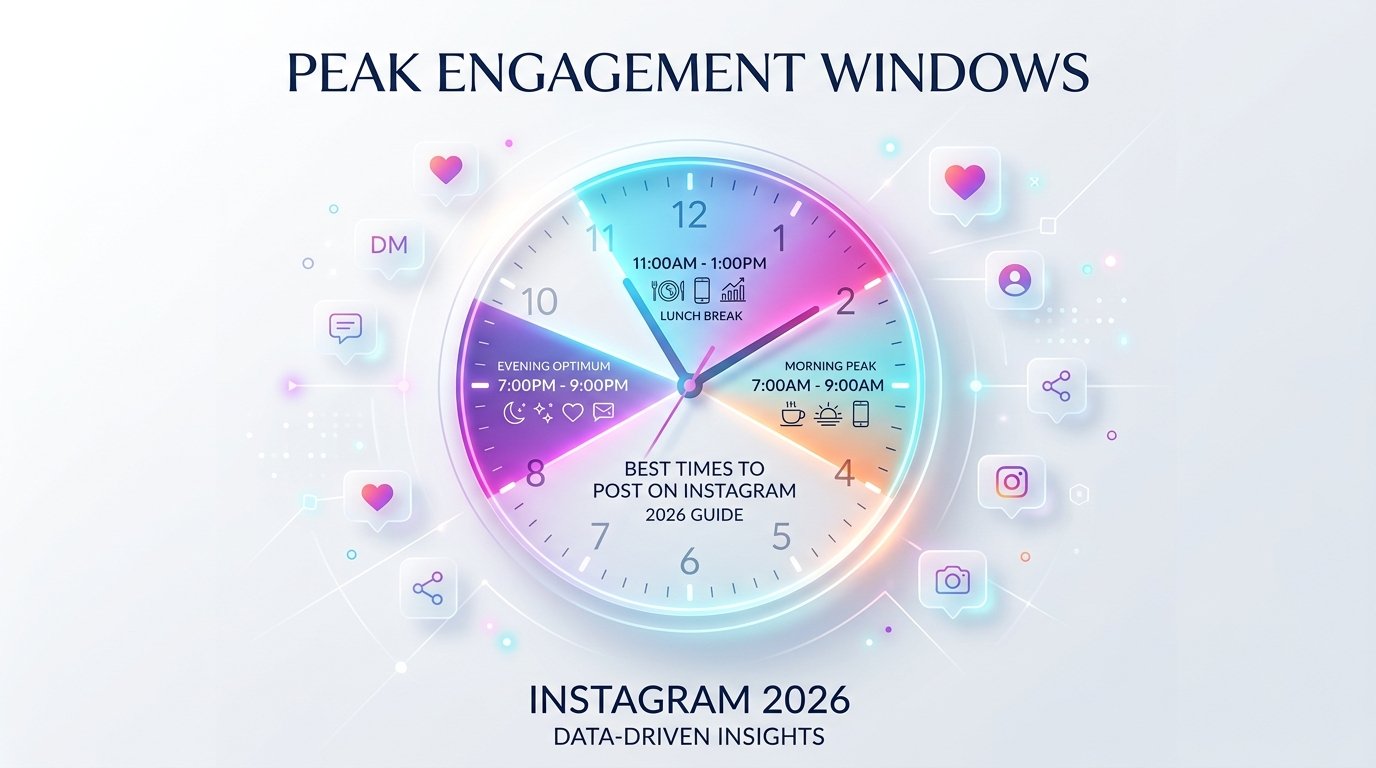
Wondering when you should post on Instagram to get more people to see and engage with your content?
There isn’t one magic hour that works for every Instagram account. Your best posting time depends on when your audience is actually online, where they live, what type of content you publish, and how they use Instagram.
Still, having a reliable starting point can make things much easier. In this guide, I’ll show you the best times to post on Instagram in 2026, what current research suggests, how timing changes by day, and how to find the best posting schedule for your own account.
What Is the Best Time to Post on Instagram in 2026?
If you need a simple starting point, weekday late mornings, afternoons, and early evenings are generally strong testing windows for Instagram in 2026.
Current studies don’t produce one identical answer. Sprout Social’s 2026 research identifies Monday through Thursday, particularly 10 a.m. to 2 p.m., as a strong general window, while Hootsuite’s latest analysis found several strong morning and afternoon/evening windows depending on the day.
That difference is important.
It tells us that generic “best time” charts can help you get started, but they shouldn’t replace your own Instagram analytics.
Quick starting point for 2026
| Day | Good Starting Windows |
|---|---|
| Monday | 3 PM–9 PM |
| Tuesday | 5 AM–8 AM or 3 PM–7 PM |
| Wednesday | Around 5 PM |
| Thursday | 4 PM–5 PM |
| Friday | Around 4 PM |
| Saturday | Around 11 AM or 5 PM |
| Sunday | 12 PM–3 PM |
These windows come from Hootsuite’s 2026 analysis of more than one million Instagram posts. They are useful testing points, not universal rules for every account.
If your audience is in a different time zone from you, always interpret these times according to the audience you want to reach.
Why Does Instagram Posting Time Matter?
Posting time matters because your content needs an audience.
If your followers are active when you publish, your post has a better opportunity to receive early interactions and attention. If you publish when most of your audience is asleep or busy, your content may have a harder time getting that initial attention.
But timing isn’t everything.
A useful posting time cannot rescue content that your audience doesn’t find interesting. Your topic, hook, creative quality, caption, format, and overall relevance still matter.
Think of posting time as an opportunity rather than a guarantee.
Best Time to Post on Instagram by Day
Let’s look at each day separately.
Best Time to Post on Instagram on Monday
A useful starting window for Monday is 3 PM to 9 PM.
Hootsuite’s 2026 data found that Instagram engagement increases later in the day on Monday.
This can work well for content people enjoy after starting their work or school week.
Try:
- Educational carousel posts
- Quick tips
- Motivational content
- Reels
- Behind-the-scenes content
If your audience tends to browse Instagram during lunch, test an earlier slot as well.
Best Time to Post on Instagram on Tuesday
Tuesday gives you two useful testing windows: 5 AM to 8 AM and 3 PM to 7 PM.
The early window may suit audiences that check Instagram before work or school, while the afternoon period can capture people during their later-day downtime.
Don’t assume the morning window is automatically better.
Test both and compare reach, engagement, profile activity, and other metrics that matter to your goal.
Best Time to Post on Instagram on Wednesday
For Wednesday, Hootsuite’s current research identifies around 5 PM as a strong starting point.
Wednesday can be a good day for content designed to create interaction.
You could test:
- Questions
- Opinion-based posts
- Reels
- Tutorials
- Product demonstrations
- Educational carousels
Best Time to Post on Instagram on Thursday
A good starting point for Thursday is 4 PM to 5 PM.
This period can work well for audiences becoming more active toward the end of the workweek.
If your audience is planning weekend activities, Thursday can also be useful for relevant recommendations, offers, inspiration, or event-related content.
Best Time to Post on Instagram on Friday
Try around 4 PM as a starting point on Friday.
People’s routines can change as the weekend approaches, so don’t automatically assume that late evening will be your strongest period.
Test your audience rather than copying another account’s schedule.
Best Time to Post on Instagram on Saturday
Hootsuite’s 2026 data highlights around 11 AM and 5 PM as useful Saturday testing windows.
Saturday audiences may have more flexible schedules, but that doesn’t mean everyone is scrolling at the same time.
Content that fits weekend behavior can be especially useful, such as:
- Food ideas
- Travel content
- Lifestyle posts
- Shopping inspiration
- Entertainment
- Fitness content
Best Time to Post on Instagram on Sunday
A practical starting window for Sunday is 12 PM to 3 PM.
Hootsuite’s research found stronger engagement during this midday period.
Sunday can be useful for relaxed, educational, inspirational, or planning-focused content.
Best Time to Post on Instagram Based on Your Audience
This is where things get more interesting.
The best time for a social media marketing account may be completely different from the best time for a restaurant, fitness creator, online store, or local service business.
Your audience has its own routine.
For example, imagine you run a fitness account.
Your followers might check Instagram:
- Before work
- During lunch
- After work
- Before or after their workouts
Now imagine you run a business selling office products.
Your audience may behave differently because they may spend much of their day working.
That’s why generic posting-time studies should be treated as a starting point rather than a final answer.
How to Find Your Personal Best Time to Post on Instagram
Your own data is usually more useful than a generic chart.
Start by looking at your Instagram analytics and identifying when your audience is most active. Then compare those periods with the actual performance of your posts.
Look for patterns rather than one unusually successful post.
Step 1: Identify your audience’s active periods
Look at when your followers are most likely to be active.
Pay attention to the audience’s location and time zone too.
If most of your followers are in another country, posting according to your own local time may not make sense.
Step 2: Choose several testing times
Don’t test just one time.
Choose three or four realistic windows, such as:
- 10 AM
- 1 PM
- 5 PM
- 8 PM
Keep the rest of your posting strategy reasonably consistent while you test.
Step 3: Test for several weeks
One post isn’t enough to determine your best posting time.
A Reel might perform poorly because the topic wasn’t relevant. Another might perform extremely well because it had a stronger hook.
Give your testing enough time to reveal patterns.
Step 4: Compare meaningful metrics
Don’t look only at likes.
Depending on your goal, compare:
- Reach
- Comments
- Shares
- Saves
- Profile visits
- Website clicks
- Follows
- Reels views
- Engagement
For example, if your goal is website traffic, a post with fewer likes but significantly more clicks may actually be the better result.
Step 5: Adjust your schedule
Once you notice a pattern, adjust your posting schedule.
If your audience consistently responds better to afternoon posts, prioritize that period.
But continue testing occasionally because audience behavior can change.
Best Time to Post on Instagram by Time Zone
Time zones can completely change your posting strategy.
Suppose you’re located in Pakistan but most of your audience is in the United States.
Posting at 7 PM Pakistan time doesn’t necessarily mean you’re reaching your American followers during their evening.
You need to think about their local time, not just yours.
If you have audiences in several regions, look for overlapping periods where your most important audiences are reasonably active.
For example, you might test one time designed for your largest audience group and another time for your second-largest market.
The goal isn’t to find one perfect global time.
The goal is to find practical windows that reach the people you actually want to reach.
Does the Best Time Change for Reels?
It can.
Reels, carousels, single-image posts, and Stories don’t necessarily produce the same audience behavior.
A Reel designed for entertainment may perform differently from a detailed educational carousel.
That’s why it’s useful to track performance by content format.
For example:
| Content Type | What to Test |
|---|---|
| Reels | Afternoon and evening windows |
| Carousels | Late morning and afternoon |
| Educational posts | Lunch or afternoon periods |
| Stories | Several periods throughout the day |
| Promotional posts | Times when your audience is most likely to act |
These aren’t fixed rules.
Use them as testing ideas and let your own data decide what deserves more attention.
Best Time to Post on Instagram for Small Businesses
Small businesses should think about customer behavior rather than simply copying influencer schedules.
A local restaurant might benefit from posting before lunch or dinner decisions.
A clothing store might test afternoon and evening periods when people have more time to browse.
A B2B business may find that weekday working hours are more useful.
Ask yourself:
When does my customer actually need or want this information?
That question can be more useful than asking, “What is the universal best time to post on Instagram?”
Best Time to Post on Instagram for Creators
Creators have more flexibility because their audiences can develop very different habits.
A gaming creator may have an audience that is active later in the day.
A fitness creator might have followers checking content early in the morning.
A student-focused creator may see different activity around school and study schedules.
Your niche matters.
Your audience’s age, location, lifestyle, and interests matter too.
Should You Post Before Your Audience Becomes Active?
This can be worth testing.
If your followers tend to become active at a particular time, you don’t necessarily have to publish exactly at the peak minute.
You can test posting slightly before the busiest period and compare the results with posts published during the peak.
For example, if your audience appears most active around 6 PM, test:
- 5:30 PM
- 6 PM
- 6:30 PM
- 7 PM
This gives you a much better understanding of your own posting window.
How Often Should You Post on Instagram?
Posting time and posting frequency are two different questions.
Posting at the perfect time won’t help much if your content strategy is inconsistent or you’re publishing low-quality posts simply to hit a number.
A better approach is to choose a schedule you can maintain.
For example:
Monday: Reel
Wednesday: Carousel
Friday: Reel
Sunday: Educational or community post
You could then test different times for each format.
Consistency gives you enough data to understand what works without forcing you to post constantly.
Should You Post Every Day?
Not necessarily.
There is no universal requirement that every Instagram account must publish a feed post every day.
For some creators, several high-quality posts per week may be more realistic.
For others, frequent Reels and Stories may make sense.
Your schedule should match:
- Your available time
- Your content quality
- Your audience
- Your goals
- Your content format
- Your ability to remain consistent
Quality and relevance should not be sacrificed simply to fill a posting calendar.
Common Instagram Posting Mistakes to Avoid
Copying another account’s posting time
Your competitor’s audience isn’t your audience.
Use their schedule for ideas if you want, but rely on your own performance data for decisions.
Assuming one time works forever
Audience behavior can change.
Seasonality, holidays, school schedules, work patterns, content trends, and audience growth can all affect when people are active.
Review your performance regularly.
Focusing only on likes
Likes are only one signal.
A post that generates shares, saves, profile visits, or website clicks can be extremely valuable even if its like count isn’t impressive.
Changing too many things at once
If you change your posting time, content format, topic, caption style, hashtags, and creative approach simultaneously, it becomes difficult to understand what actually caused the change.
Test one major variable at a time whenever possible.
Posting at a convenient time instead of an audience-friendly time
Your easiest time isn’t always your audience’s best time.
If your audience is active at 7 PM and you always post at 9 AM because it’s convenient for you, you’re limiting your own testing opportunities.
Treating generic studies as universal rules
Research can give you a useful starting point, but your account has its own audience.
Even major social media studies can produce different recommended windows because they use different datasets, industries, audiences, and methodologies.
A Simple Instagram Posting-Time Test You Can Use
If you’re not sure where to begin, try this simple experiment.
Week 1
Test late morning.
Week 2
Test early afternoon.
Week 3
Test late afternoon.
Week 4
Test early evening.
Keep your content quality and general strategy as consistent as possible.
At the end of the test, compare the results.
You don’t need to find a magical minute.
You’re looking for a reliable window where your audience tends to respond well.
Your 2026 Instagram Posting Strategy
If I were building a posting schedule from scratch, I wouldn’t blindly choose one “perfect” time.
I’d start with current research, then customize it.
A simple process would look like this:
- Identify where your audience lives.
- Check when your followers are most active.
- Choose two to four testing windows.
- Publish consistently.
- Track reach and meaningful engagement.
- Compare similar content formats.
- Keep the strongest windows.
- Re-test periodically.
This approach is much more useful than changing your posting time every few days based on random advice.
The Best Time to Post on Instagram Is the Best Time for Your Audience
If you came here looking for one exact answer, here’s the honest answer: there isn’t one universal best time to post on Instagram in 2026.
Current research gives us useful starting points. For example, Hootsuite’s latest study highlights different peak windows throughout the week, while Sprout Social’s research finds strong weekday activity around late morning and early afternoon.
But your own audience should ultimately guide your schedule.
Start with a few strong testing windows, watch your analytics, compare similar posts, and adjust based on what you actually see.
The goal isn’t to become obsessed with the clock.
The goal is to publish when your content has the best realistic opportunity to reach the people who care about it.
FAQs
Internal Linking Opportunities
1. Anchor: Instagram image sizes
Related article: Instagram Image Sizes 2026: Complete Guide to Every Post, Story and Reel Size
Placement: Add this near the section discussing Instagram content formats.
2. Anchor: best Instagram caption ideas
Related article: Instagram Caption Ideas: Examples for Creators, Brands and Small Businesses
Placement: Link naturally when discussing how content quality affects engagement.
3. Anchor: Instagram content calendar
Related article: How to Create an Instagram Content Calendar That Actually Works
Placement: Add this in the section about creating a consistent posting schedule.
4. Anchor: Instagram Reels tips
Related article: Instagram Reels Tips for Beginners: How to Create Better Short-Form Videos
Placement: Add this in the section discussing Reels and posting times.
5. Anchor: how to grow on Instagram
Related article: How to Grow on Instagram in 2026: A Practical Beginner’s Guide
Placement: Link from the conclusion or the section about building a complete Instagram strategy.
6. Anchor: Instagram engagement tips
Related article: Instagram Engagement Tips: Simple Ways to Get More Comments, Saves and Shares
Placement: Add this when discussing why likes aren’t the only metric that matters.
7. Anchor: Instagram hashtags
Related article: How to Use Instagram Hashtags in 2026: A Practical Guide
Placement: Add this when discussing the different factors that can affect post performance.